Heat-wave mortality in land-based fish farms
Fish die during heat waves not because too little oxygen is added, but because the oxygen that is added does not stay in the water. DeepIQ leaves your existing equipment untouched and extends how long that oxygen remains dissolved.
Field video
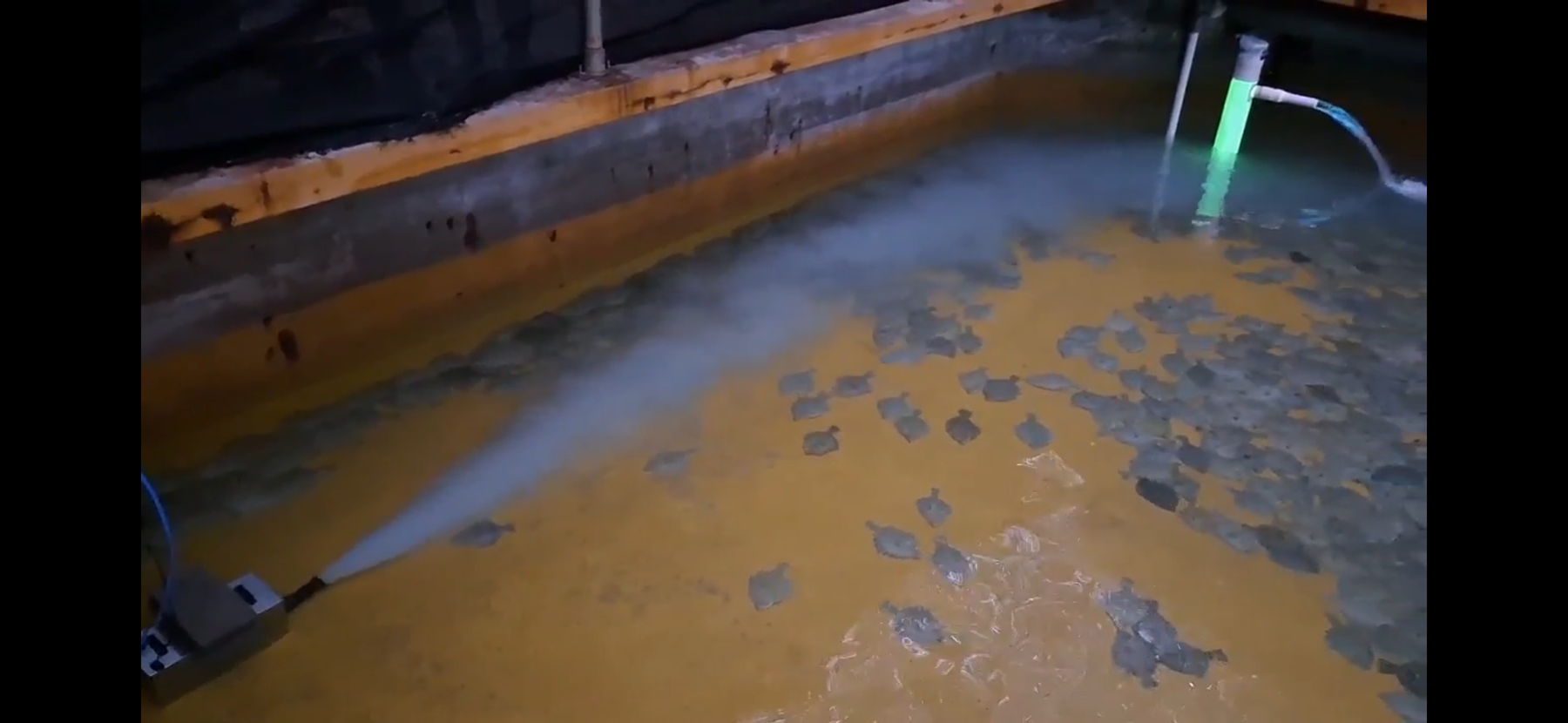
Field footage from a heat-wave season — 2 clips
Two clips recorded on site. Plays on our Naver blog (Korean).
Watch →External link. Opens in a new window.
Why adding oxygen was not enough
High-temperature mortality is not about adding oxygen.
It is about holding it in the water.
For every 1°C rise, the oxygen water can hold falls by 1.6%. But the oxygen flounder consume rises by 8%. Demand grows five times faster than supply declines.
From 28°C to 32°C the gap widens 1.46-fold. No matter how much oxygen is injected, coarse bubbles cross 0.8 m of depth in seconds and escape to the air. What keeps fish alive is not the amount added — it is the amount that stays.
15 minutes to the danger threshold
Oxygen solubility — Weiss (1970) seawater equation, salinity 33 psu. Oxygen demand — a conservative Q10 of 2.2 was applied, within the standard range for fish metabolism. Measured studies report a steeper rise: olive flounder held at 29°C for four days averaged 317.5 mg O₂·kg⁻¹·h⁻¹ against 116.7 at 20°C (Fisheries and Aquatic Sciences). Buffer time is calculated from standard tank specifications and varies with stocking density and organic load.
In the field
The equipment
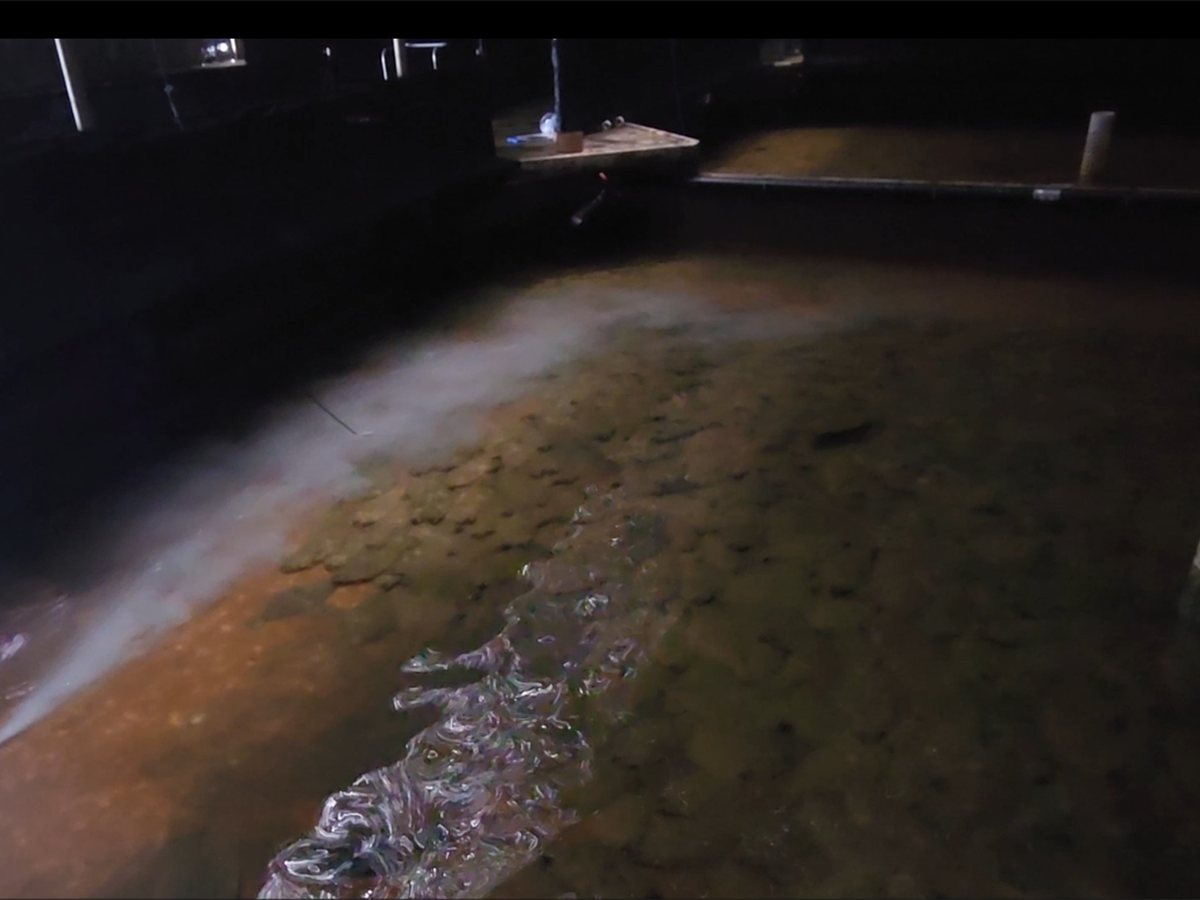
Oxygen nanobubble unit for land-based farms. Unit count is sized from tank dimensions and biomass.
Tell us your site conditions and we will size the system for you. Tank dimensions, biomass, and peak summer water temperature are enough.
Contact us